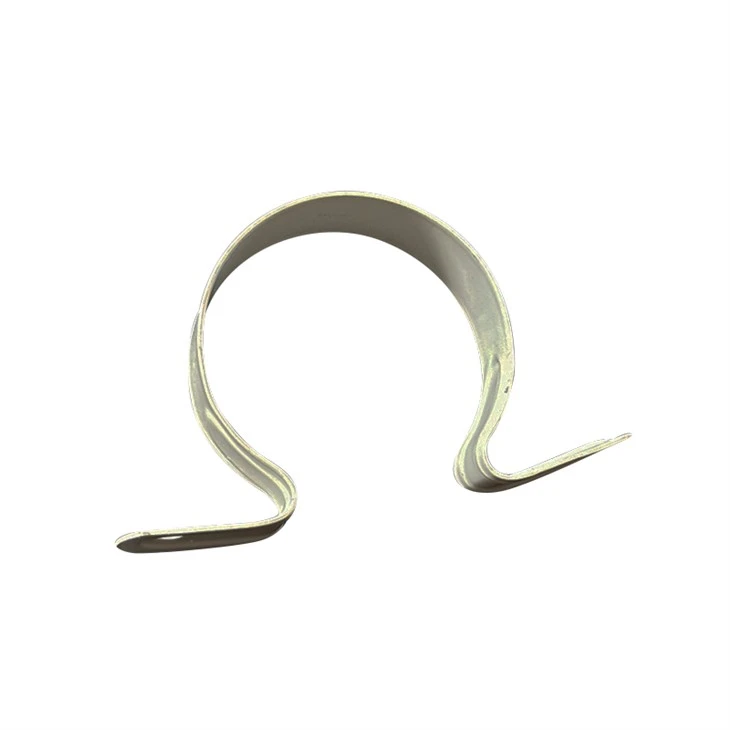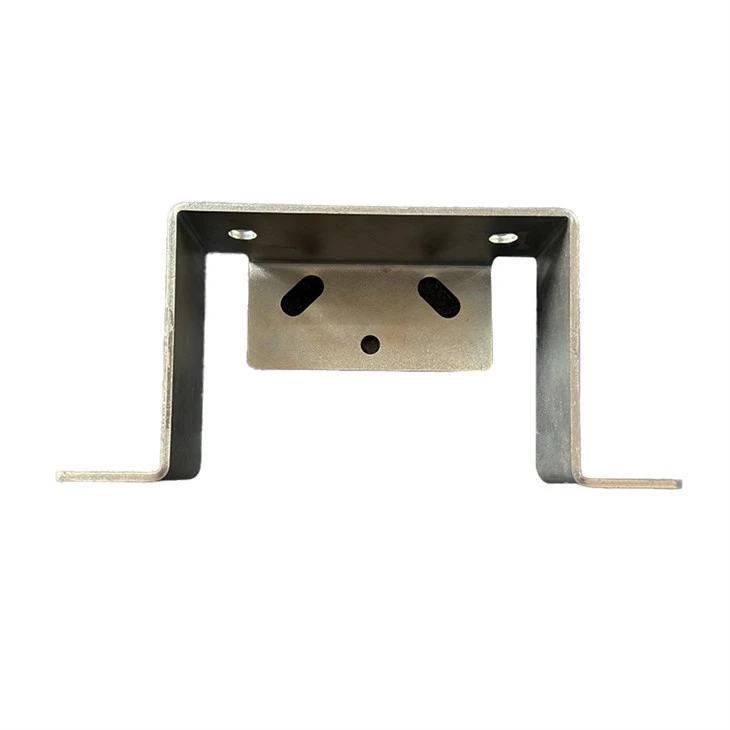

Sheet metal stamping is a forming process that uses a press and dies as core tools. It applies external force to sheet metal, causing plastic deformation or separation to obtain parts of the desired shape and size. As an efficient and economical mass production method in the metal processing field, its principle is based on the synergistic effect of material plasticity mechanics, die constraints, and equipment dynamics. It is widely used in various industrial manufacturing scenarios such as automobiles, home appliances, electronics, and construction.
Essentially, the sheet metal stamping process involves the internal stress of the sheet metal exceeding its yield strength under external force, entering the plastic deformation stage, thereby achieving a change in shape and size. The press provides the required stamping force, which, through the punch and die of the die, applies concentrated or distributed loads to the sheet metal, causing it to flow or separate along a predetermined path under the constraint of the die cavity. Based on the forming properties, stamping processes can be divided into two main categories: separation processes and forming processes. The separation process includes blanking, punching, and trimming, aiming to shear a portion of the sheet metal along a closed contour, separating it from the base material. The forming process encompasses bending, deep drawing, flanging, and bulging, allowing the material to achieve the desired three-dimensional contour and local shape without breaking.
In the separation process, the die edges are fitted with a certain clearance. When the punch moves downwards, it applies shearing force to the sheet metal, causing cracks to form and propagate along the cutting edge line, ultimately separating the material. The clearance size, cutting edge sharpness, and punching speed directly affect the cross-sectional quality and dimensional accuracy. The forming process relies on the plastic flow of the material under the combined action of compressive and tensile stresses. For example, during deep drawing, the punch presses the sheet metal into the die, and the material undergoes radial elongation and thickness reduction under the constraint of the blank holder, gradually forming a cylindrical or box-shaped part. Bending forces the sheet metal to change angle around a certain axis through the punch and die, accompanied by the stretching and compression of the inner and outer fibers, resulting in permanent deformation.
The formability of the material is a key factor determining the feasibility of stamping. The yield strength, elongation, hardening index, and thickness anisotropy coefficient of different metal sheets directly affect their tendency to crack, wrinkle, and springback. Appropriate material selection and process matching can reduce die load and scrap rate while ensuring forming quality. Lubrication technology also plays a crucial role in stamping principles; by forming an oil film on the surface of the sheet metal and die, it reduces frictional resistance and heat accumulation, improving material flowability and extending die life.
The power characteristics of the press and the geometric accuracy of the die together ensure the stable implementation of the stamping process. Mechanical presses rely on flywheel energy storage and clutch braking to achieve reciprocating motion, while hydraulic presses use liquid pressure to drive the slide, providing larger and controllable blank holder forces, suitable for heavy-duty conditions such as deep drawing. The guiding accuracy, clearance uniformity, and surface roughness of the die determine the efficiency of forming force transmission and the dimensional consistency of the parts.
Modern sheet metal stamping also incorporates digital simulation and online monitoring technologies. Finite element analysis can predict stress-strain distribution and forming defects during the process design stage, optimizing process parameters. The tonnage and displacement monitoring system equipped on the press can capture abnormal fluctuations during the forming process in real time, providing a basis for quality control and equipment maintenance.
In general, the principle of sheet metal stamping is based on plasticity mechanics. Through the power provided by the press and the constraint and guidance applied by the die, metal sheets are separated or formed under controllable conditions. A deep understanding and precise application of this principle are the core prerequisites for achieving high-quality, high-efficiency stamping production, and also lay a solid theoretical foundation for process innovation and equipment upgrades.