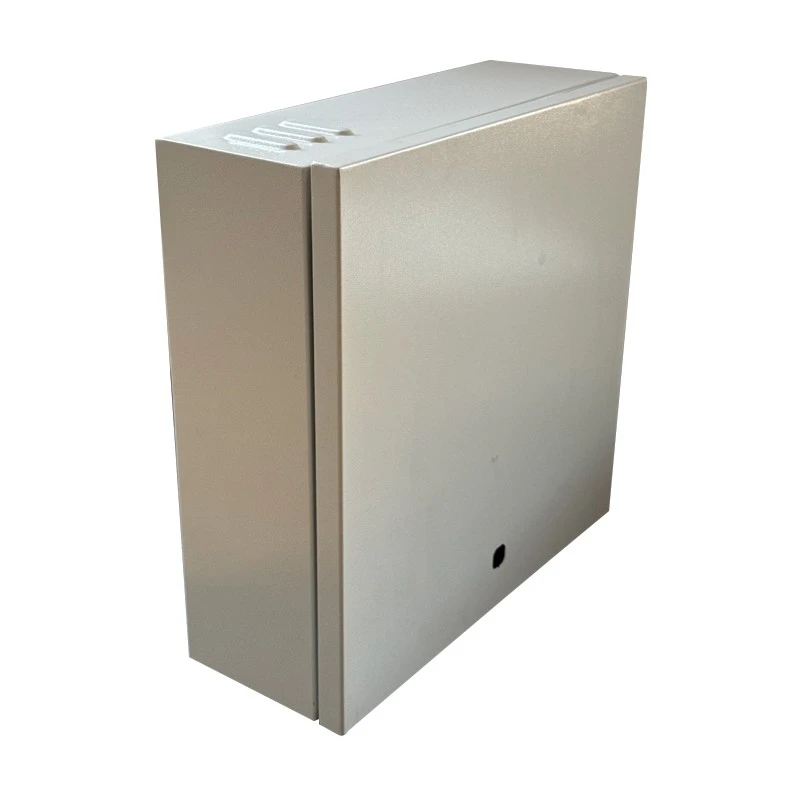

In the overall operating system of electrical and automation equipment, the electrical enclosure, while not a core component, is a crucial foundation for ensuring the long-term stable and safe operation of the equipment. Many people easily overlook its value, but whether in industrial production lines, outdoor municipal engineering projects, or scenarios such as new energy, security, and communication, all live components, control modules, and wiring systems require a reliable enclosure as a protective barrier. Simply put, the quality of the electrical enclosure directly affects the lifespan, operational stability, and safety factor of electrical equipment during on-site operations.
The core functions of the electrical enclosure revolve around three main dimensions: protection, load-bearing capacity, and structural integrity. First, it provides basic safety protection. The enclosure completely isolates the internal live structures, fundamentally preventing the risk of accidental electric shock, which is the most basic safety guarantee for electrical work. Second, it provides environmental protection. Whether it's indoor dust and humid air, or outdoor rain, UV exposure, and acid/alkali corrosion, a high-quality enclosure can effectively isolate external interference, preventing problems such as short circuits, aging, and corrosion of internal components. In addition, the enclosure can stably support various electrical components such as PLCs, power supplies, switches, and terminals, neatly organizing messy wiring, making equipment wiring clear, maintenance convenient, and significantly reducing later maintenance costs.
Currently, there is a wide variety of electrical enclosure materials on the market, and different materials are suitable for different scenarios. There is no absolute superiority or inferiority, only suitability. Carbon steel enclosures are the most commonly used, offering excellent cost-effectiveness, sufficient structural rigidity, and strong load-bearing capacity. After powder coating and galvanizing processes, they can meet the needs of most indoor power distribution and general industrial control scenarios, and are also the most widely used type in the industrial field. For harsh environments such as outdoor, coastal, and chemical industries, 304 and 316L stainless steel enclosures are a more reliable choice. They have stronger rust resistance, corrosion resistance, and aging resistance, and can withstand complex working conditions such as high and low temperatures and high salt spray for a long time, with a service life far exceeding that of ordinary carbon steel enclosures.
Aluminum alloy and flame-retardant plastic enclosures are more often used in lightweight and miniaturized equipment scenarios. The biggest advantages of aluminum alloy enclosures are their light weight and excellent heat dissipation, making them particularly suitable for inverters, precision instruments, and small industrial control equipment. PC and ABS flame-retardant plastic enclosures offer excellent insulation and stable waterproof and dustproof performance, requiring no additional insulation treatment. They are widely used in light-load scenarios such as outdoor monitoring, sensor wiring, and low-voltage control, demonstrating strong practicality.
Protection rating is the core standard for evaluating the performance of electrical enclosures and is the most crucial reference point when selecting a model. For conventional indoor equipment, an IP54 protection rating is sufficient to withstand daily dust and splashes of water. Most outdoor projects prioritize IP65 enclosures, providing complete dustproof protection, withstanding high-pressure water jets, and adapting to complex outdoor environments such as rain and dust. For special scenarios such as photovoltaic energy storage, ships, and deep-sea equipment, high-protection enclosures of IP67 and above can withstand extreme conditions such as short-term immersion and high-intensity corrosion, ensuring stable operation of the equipment around the clock.
From a structural design perspective, mature electrical enclosures balance practicality and durability. The standard enclosure is equipped with sealing strips, high-quality hinges, and a protective door lock, along with a dedicated grounding structure, ensuring comprehensive waterproof, dustproof, and anti-static performance. The interior features standardized mounting positions and wiring holes, allowing for flexible installation of various accessories. Customization options are also available to meet specific customer needs, including opening modifications, size adjustments, silkscreen markings, and the addition of heat dissipation structures, adapting to the individual installation requirements of different equipment.
Overall, while electrical enclosures may appear simple in structure, they are indispensable components of electrical systems. A well-suited and high-quality enclosure not only improves equipment stability but also effectively reduces the probability of failure and maintenance costs, providing a solid foundation for the safe implementation and long-term operation of various electrical and automation projects. This is the core reason why engineering and equipment companies consistently prioritize enclosure selection and quality.