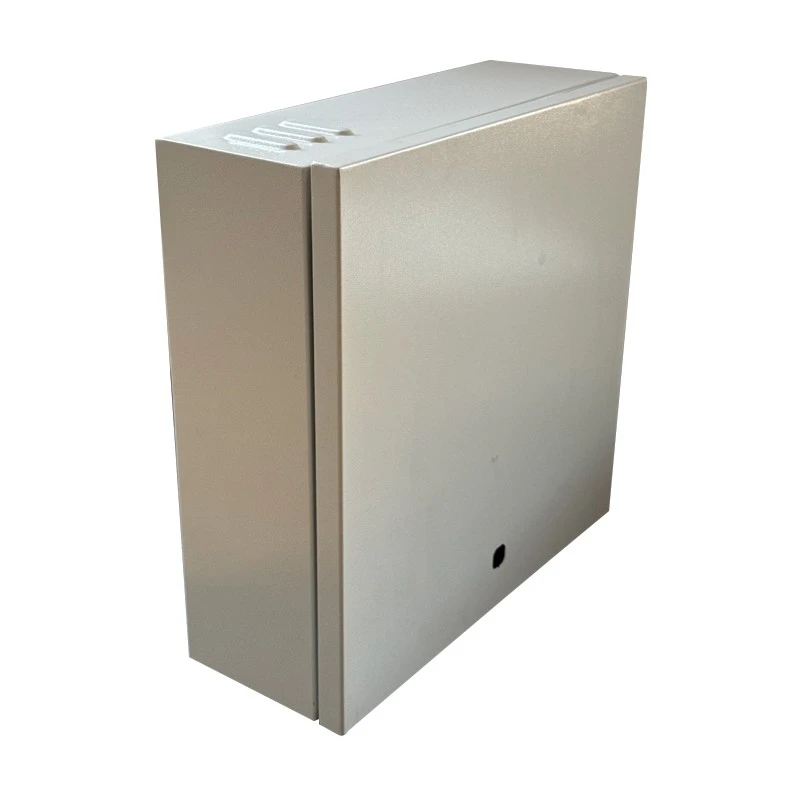

Whether in power transmission fittings, mechanical equipment assembly, electrical accessories, or hardware engineering, precision metal stamping parts are fundamental components with a wide range of applications. Compared to traditionally cut and forged parts, stamped parts offer higher precision and better consistency, making them suitable for mass industrial production. They are also the mainstream processing technology for various power fittings such as yoke plates, adjusting plates, and connecting plates, permeating the entire industrial hardware supply chain-understated yet indispensable.
Simply put, precision metal stamping uses specialized stamping dies and pressure to cut, bend, punch, and shape cold-rolled steel plates, carbon steel, stainless steel, and alloy plates in a single process, producing metal parts that are formed in one go. Unlike ordinary rough-machined hardware, precision stamping emphasizes controllable dimensions, precise hole positions, flat surfaces, and stringent tolerance control, fully meeting the high-standard assembly requirements of industries such as power, electromechanical, and rail transportation, and is suitable for refined assembly conditions.
It is compatible with a wide variety of materials, and materials can be customized to meet specific needs. The industry commonly uses materials such as Q235 carbon steel plate, high-strength alloy steel, 304 stainless steel, and galvanized cold-rolled plate, with the optimal material selected based on the application scenario. For outdoor power applications, hot-dip galvanized plates are preferred, and the finished product undergoes overall anti-corrosion treatment after stamping, resisting rust and weathering. Indoor electromechanical equipment parts mostly use stainless steel stampings, which have inherent rust-resistant properties and require no secondary plating after processing. They are suitable for dry and enclosed environments, and the material selection is flexible and adaptable to various working conditions.
The core advantage of precision stamping is that the stability of the finished product far surpasses that of hand-made or machined parts. Relying on integrated mold mass production, parts in the same batch have uniform thickness, standard hole diameter, and regular edges and corners, free of burrs, misaligned holes, and plate deformation. For example, the three-hole yoke plate, double cross yoke plate, and DB adjustment plate commonly used in the power industry are all manufactured using precision stamping technology. The hole spacing is symmetrical and standard, the bolt fit is high, and high-altitude assembly is seamless, eliminating problems such as hole misalignment and splicing jamming, significantly reducing on-site installation difficulty.
From a performance perspective, one-piece stamping offers superior structural integrity. The sheet metal's fiber structure remains intact and unbroken, resulting in better compressive and tensile strength compared to cut and welded parts. It is less prone to cracking and bending under stress. For power supply load-bearing hardware, thicker sheet metal can be customized into high-strength stamped parts to meet long-term tensile loads on power lines, resist strong winds, vibrations, and temperature-induced deformation. Suitable for long-term outdoor use on poles and towers, its durability has been verified through engineering testing.
Furthermore, it boasts significant economic advantages, making it suitable for large-scale engineering procurement. The one-piece stamping process is streamlined, with fast forming speed, short mass production lead times, and uniform appearance. Subsequent deep processing such as grinding, drilling, and galvanizing is convenient. Custom-made irregular shapes, multiple hole positions, and irregular forms with custom-designed holes are available based on drawings. Non-standard sizes and standard specifications can be molded on demand, suitable for customized production of various categories of power fittings, mechanical parts, electrical connectors, and equipment mounting brackets.
Many engineering failures stem from substandard precision and uneven stress distribution in hardware components. Precision metal stamping parts rely on high-precision processes, controlling every hole spacing, plate thickness, and corner dimension, while balancing structural strength, assembly accuracy, and corrosion resistance. They are highly standardized, widely adaptable, and have stable load-bearing capacity, balancing mass production cost-effectiveness and usage safety. These are essential and reliable basic metal components for modern power engineering and electromechanical manufacturing industries.