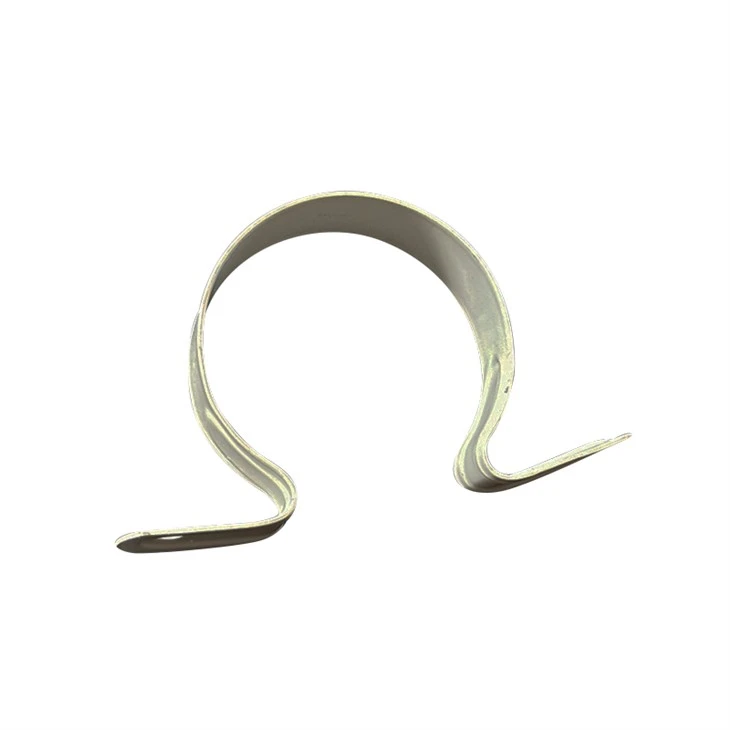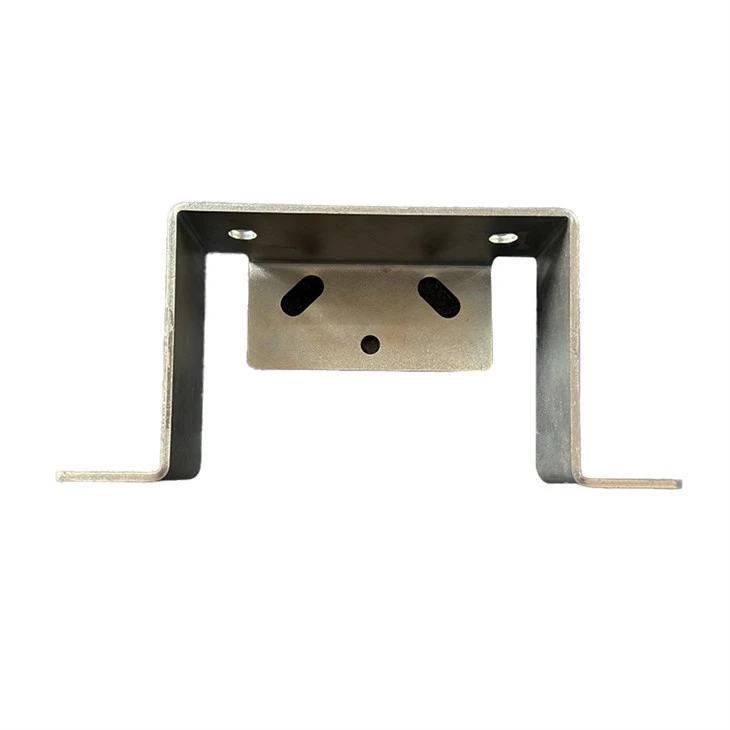

The global automotive industry is undergoing an unprecedented transformation driven by electrification, intelligent driving, lightweight design and high-standard safety regulations. Whether for traditional fuel vehicles, hybrid electric vehicles or new energy electric vehicles, stamped metal components have always been the most basic and largest-volume structural and functional parts in the entire vehicle manufacturing system. Automotive stamped metal components cover body structural parts, chassis connection parts, safety protection parts, electronic control shell parts, motor and battery supporting parts, interior and exterior decorative hardware and a large number of small precision connecting shrapnel. These seemingly ordinary metal stamping parts are distributed in every key assembly area of the automobile, and their comprehensive quality directly determines the overall driving safety, driving comfort, service life and vehicle comprehensive performance of the whole vehicle.
Automobile is a special industrial product with high safety attributes. It will face complex and harsh working conditions such as high-speed driving, long-term vibration, alternating cold and hot temperature changes, road bump impact and outdoor humid corrosion environment in the whole service cycle. If the precision of stamped metal components is insufficient, a series of hidden problems will occur in the later assembly and long-term use process, including assembly jamming, matching gap inconsistency, structural local stress concentration, parts deformation and fracture, abnormal vibration noise, water leakage and air leakage, and even major safety accidents in serious cases.
Automotive stamped metal components refer to metal parts processed by cold stamping technology with automobile special steel plates, galvanized plates, high-strength alloy steel, aluminum alloy and stainless steel as raw materials. Through multiple stamping processes such as blanking, punching, bending, deep drawing, flanging, embossing and local forming, the raw metal sheets are made into various fixed shapes and structural sizes.
Ultra-high precision automotive stamped components. This is the core precision part that has increased rapidly in recent years with the development of new energy vehicles and automotive electronics. It is mainly used in new energy battery system structural parts, motor conductive stamping parts, vehicle control system shielding parts, automobile safety structural parts and micro precision electronic connecting parts. The dimensional tolerance needs to reach ±0.005mm to ±0.05mm, and some micro thin stamped parts even need micron-level precision control. It has extremely strict requirements on geometric tolerance, surface roughness, forming stability and fatigue resistance.

Modern automobile manufacturing has fully entered the era of automated assembly and intelligent production line. Most automobile assembly links no longer rely on manual trial assembly and manual trimming, but realize rapid docking, automatic locking and modular assembly through mechanical arms and intelligent equipment. All assembly robots and automation equipment operate according to unified digital size standards. If the precision of stamped metal components is unqualified and the size deviation exceeds the allowable range, the parts cannot be accurately locked and positioned during automatic assembly.
High-precision automotive stamped components have excellent batch consistency and interchangeability. All parts produced in batches can be perfectly matched with the pre-designed assembly standards, which realizes seamless docking of automated production, greatly improves the overall production efficiency of automobile manufacturing, and reduces the defective rate of assembly links.
At the same time, the consistent assembly gap brought by high precision is also an important guarantee for automobile appearance quality. For body outer cover stamping parts such as doors, fenders and engine hoods, precise size control can ensure uniform gaps between adjacent body parts, smooth lines and coordinated overall appearance, avoid abnormal gaps and uneven seams, and improve the overall texture and refined sense of the whole vehicle.
Insufficient flatness, edge burrs and forming indentation caused by low precision will damage the overall surface integrity of automotive stamped metal components. In the subsequent surface treatment process such as electrophoresis, galvanizing and spraying, the concave and deformed parts are easy to accumulate impurities, resulting in incomplete coating, bubbling and peeling of the protective layer. In the later use process, rust and corrosion will occur first from the defective parts, which will shorten the service life of the parts and affect the overall anti-corrosion performance of the vehicle.
Mold is the core factor determining the precision of stamped metal components, especially for automotive parts with complex structures and high precision requirements. The manufacturing precision, material hardness, structural design and wear resistance of the stamping mold directly determine the forming effect and dimensional stability of the parts. High-precision automotive stamping molds need to adopt high-quality mold steel, through precision CNC machining, wire cutting and mirror spark processing, to ensure the matching accuracy of the mold cavity. At the same time, reasonable mold structure design can effectively control the rebound, deformation and cracking of metal materials in the stamping process, and maintain long-term stable output of high-precision parts.