

Metal stamping, as one of the most fundamental and cost-effective metal forming processes, has long served as the backbone of mass production across automotive, electronics, home appliances, medical devices, and industrial equipment. For decades, Metal Stamping Parts focused on volume, speed, and low cost, with tolerance requirements typically ranging from ±0.1 mm to ±0.5 mm. However, in recent years, a profound and irreversible shift has taken place: precision has evolved from an optional advantage into a mandatory industry standard.
Today's end Metal Stamping Parts-especially in new energy vehicles, 5G communications, consumer electronics, and medical devices-demand components with micron-level accuracy, ultra-smooth surfaces, complex geometries, and consistent quality over millions of pieces. Traditional stamping methods can no longer satisfy these strict requirements. As a result, the entire metal stamping industry is undergoing a comprehensive transformation toward ultra-precision manufacturing, driven by market demand, technological innovation, material upgrades, and global competition.
To understand the precision trend clearly, we must first define what "precision metal stamping" means in 2026 and beyond. Unlike conventional stamping, precision metal stamping refers to the manufacturing of metal components with tight tolerances, high dimensional consistency, excellent surface quality, and stable mechanical properties using advanced molds, high-precision presses, digital control systems, and strict quality management.
The shift toward precision is not accidental; it is driven by four major forces: downstream market demand escalation, advanced technology maturity, material innovation, and global supply chain competition.
New energy vehicles are the largest driver of precision metal stamping parts demand. Compared to traditional fuel cars, EVs require:
Lightweight structural parts: Aluminum and high-strength steel (HSS) components with tight tolerances to reduce vehicle weight and increase range
Battery system components: Battery enclosures, trays, and connection buses with ±0.01 mm tolerance and high electrical conductivity
Motor & electronic parts: Motor cores, stator brackets, and EMI shields with micron-level precision
Safety components: High-strength door beams and crash structures with consistent mechanical properties
It is estimated that the value of precision stamped parts per EV is about 20% higher than that of a conventional car, and the global EV market will continue to grow at over 25% annually until 2030.
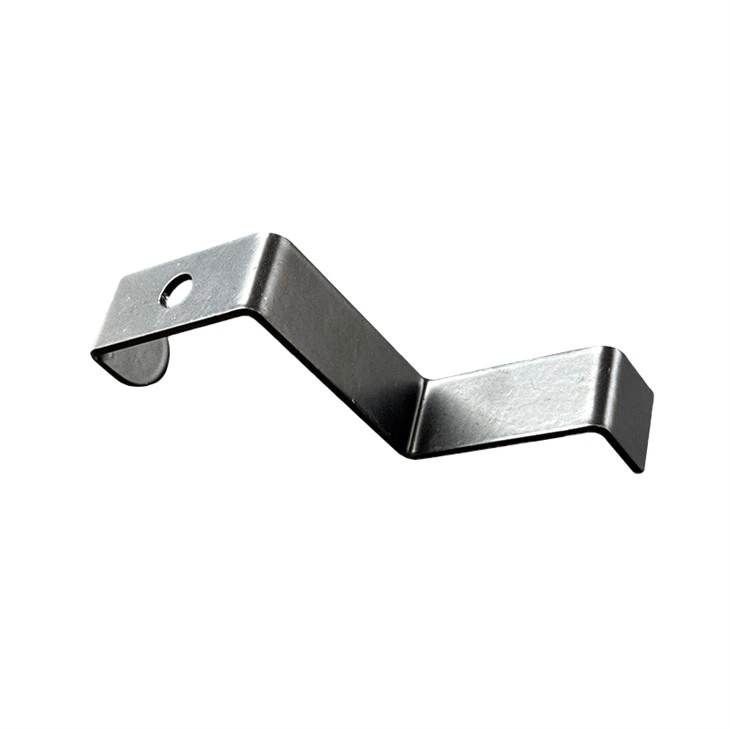
Progressive die stamping is the most widely used precision metal stamping parts. A single progressive die contains 10–30 stations, completing punching, bending, forming, embossing, and tapping in one continuous stroke.
Precision: ±0.005 mm ~ ±0.01 mm
Speed: 300–800 SPM
Material utilization: >90%
Ideal for: Electronics components, motor cores, automotive brackets
Fine Blanking (Precision Shearing)
Fine blanking metal stamping parts parts with smooth, burr-free edges and high dimensional accuracy by applying three-way force (blank holder, punch, counter punch).
Edge quality: Ra < 0.8 μm, no burrs
Tolerance: ±0.01 mm
Ideal for: Automotive transmission parts, gear plates, medical components
Micro-Stamping (Ultra-Thin & Miniature Parts)
Micro-stamping focuses on parts with thickness <0.5 mm and feature size <1 mm, widely used in electronics and medical industries.
Material thickness: 0.05 mm ~ 0.5 mm
Tolerance: ±0.001 mm ~ ±0.003 mm
Ideal for: SIM trays, medical catheter components, sensor pins
Hot Stamping & Forming for High-Strength Materials
Hot stamping heats high-strength steel to 900–950°C, then stamps and quenches it in the mold, achieving ultra-high strength (1500 MPa) and precise dimensional control.
Springback: Reduced by >60% compared to cold stamping
Ideal for: Automotive safety parts, EV battery structural components
In-Die Sensing & Adaptive Control
Modern precision stamping lines integrate real-time force, displacement, and temperature sensors to monitor and adjust process parameters automatically, ensuring consistent precision even with material batch variations.
As a professional manufacturer, we specialize in custom precision metal stamping parts with tolerances from ±0.005 mm to ±0.01 mm, serving global customers in new energy vehicles, 5G, medical devices, and industrial equipment. We provide one-stop services including DFM optimization, mold design & manufacturing, prototyping, mass production, surface treatment, and strict quality inspection.


